Showing posts with label Beatles. Show all posts

Eddie Kramer—From Jimi Hendrix To Woodstock

This August marks the 40th anniversary of Woodstock, the original event spawning two multi-record sets and a feature-length movie (recently restored and expanded). Leading off with Richie Havens (he was the first artist on the scene with an intact band), a few of the other acts included Jefferson Airplane, Crosby, Stills & Nash, a pregnant Joan Baez, Country Joe & the Fish, Santana, Sha Na Na, Sly & the Family Stone, Ten Years After, Janis Joplin, the Who, Creedence Clearwater Revival, Joe Cocker, the Band and the Grateful Dead. What is burned into everyone's consciousness, however, was the show-closing set by Jimi Hendrix (sans Experience) and his interpretation of The Star-Spangled Banner.

What is not widely known is who was in charge of recording the music for all to enjoy long after Max Yasgur's farm had been turned into a sea of mud and debris. Running on adrenalin and vitamin shots for those three mad days was the legendary Eddie Kramer, audio engineer extraordinaire. From the Beatles to Traffic, Led Zeppelin to Kiss, Rolling Stones to Ted Nugent, Kramer was often the guy behind the studio mixing desk, soldiering on to this day.

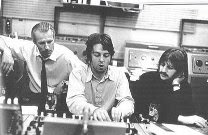
...I felt intimidated...when the Beatles came to Olympic on
two separate occasions to record
All You Need Is Love
and
Baby, You’re A Rich Man with George Martin.

Eddie Kramer, on taking rock photographs

By chance it was young Kramer—then a budding engineer with Olympic Studios in London—who was called upon to record the first tracks featuring a sensational guitarist just over from America—none other than Hendrix. The two formed a bond that lasted the duration of the latter's career, with Hendrix following Kramer's lead in the production of the star's albums—including several posthumous releases.

In 1992 John McDermott collaborated with Kramer to write Hendrix: Setting the Record Straight. Not only is this account the most accurate of the many Hendrix tomes, the book features many of Kramer's photos taken during Hendrix recording sessions. Also included are several by the late Linda McCartney.

Kramer continues to consult with Experience Hendrix; a recent project involved updating original VH1 footage to produce an enhanced At Last...The Beginning: The Making of Electric Ladyland DVD. Notable album "session musicians" interviewed for the video include the likes of Dave Mason, Steve Winwood and Jack Casady, the latter with whom Hendrix had jammed backstage at the '67 Monterey Pop Festival.

Bassist Noel Redding having walked out on the Experience at that point, here Kramer discusses All Along the Watchtower in this video segment:

Ryan Sparks, writing for Classic Rock Revisited, recently interviewed Eddie Kramer about how he came to be chosen to record the '69 Woodstock Festival and what that experience was like. A portion of that interview is presented here (by permission of the author).

[Sparks] Woodstock was a truly unique, one [of] a kind festival. How did you become involved?

[Kramer] I knew that Jimi was going to be playing up there and the film company called me and said, “Hey, you record Jimi, why don’t you come up and record the whole thing?”

Continued...
[Sparks] After you surveyed the scene, did you think you’d have enough time to get everything in order to be fully prepared for when things started?

[Kramer] No way. I had doubts that we were ever going to get anything, but…[the] crew was tremendous and they pulled it together. We got going and three days of drugs and hell became part of American history.

[Sparks] Tell me about your recording setup.

[Kramer] [We had] two eight tracks, a twelve channel board and some little Shure mixers. [To call it] primitive [would be] a mild understatement.

[Sparks] You and your crew had to stay awake for three days straight. Was it just Lee Osborne and you?

[Kramer] Yeah... The stage crew…were the ones who we were trying to communicate with, which was rather difficult. We had vitamin B12 shots to keep us all going [and] slept on the floor of the truck for a few hours. [We] rolled tape all the time, whereas the poor film guys they were struggling with five cameras trying to keep it all going.

[Sparks] You’re not only a legendary producer/engineer, but you’ve also captured some great images of some of rock’s greatest musicians with your camera…In addition to Jimi, did you manage to shoot anyone else at the festival while they were performing?

[Kramer] No…Once the recording had settled down on Jimi I said ‘OK, guys, watch the meters, watch the machines, I’m going to run out for like ten seconds.’ I ran out with my camera and shot about two or three pictures of Jimi and then ran back to the truck.

[Sparks] [Did] any of [the groups] pose any kind of challenge?

Wolfgang's Vault - Reissue

[Kramer] Every artist presented his own peculiar set of challenges. You’re dealing with battlefield recordings here; these are not for the faint of heart [laughs]. You had to figure out where each microphone was, which band was coming out, what they were going to be playing, who’s playing, what’s playing. You know that old Abbott and Costello routine, "Who’s On First?" It was just like that.

[Sparks] With such an impressive and extensive back catalogue of work, where does Woodstock rank on your list of achievements?

[Kramer] Woodstock has to stand out; [pauses] how does one even begin?

[Sparks] You’ve captured some of rock’s most iconic live albums; how would you compare it to some of those?

[Kramer] It was the most difficult, but it also yielded some of the great performances of our time. It certainly stands out in my memory....It continues to influence subsequent generations, which I’m very pleased about.

[Sparks] [In] that moment, did you think you were capturing something magical that people would still be talking about forty years later?

[Kramer] No. I was only too concerned about getting the…stuff to record and making sure it appeared on tape; that was my main concern. Who cared about history then!

Wrecking Crew Charts More Than the Beatles

Mystery Group Dominated U.S. Airwaves

On AM radio back in the day, the Beatles charted a total of 47 times. Not all of these were number one positions, with the biggest travesty—at least in the U.K.—being the power-single Strawberry Fields Forever/Penny Lane losing out to Englebert Humperdinck's Release Me.

But there was another group—perhaps one you've never heard of—that gave the Fab 4 stiff competition when it came to dominating commercial radio airwaves in America. Consider this partial list of super hits:

All I Really Want To Do, California Dreamin', Classical Gas, Da Doo Ron Ron, Danke Schoen, Donna, Eve of Destruction, Everybody Loves Somebody, Everybody's Talkin', Fun Fun Fun, Good Vibrations, Help Me Rhonda, Homeward Bound, I Got You Babe, I'm a Believer, La Bamba, Let's Dance, Little Old Lady (From Pasadena), MacArthur Park, Mrs. Robinson, Mr. Tamborine Man, Natural Man, Rhinestone Cowboy, River Deep Mountain High, Rockin' Robin, San Francisco (Be Sure to Wear Flowers in Your Hair), Scarborough Fair, Sixteen Tons, Sloop John B, Stoned Soul Picnic, Strangers in the Night, Surf City, The Beat Goes On, The Girl Can't Help It, Then He Kissed Me, These Boots Were Made for Walkin', This Diamond Ring, Walking To New Orleans, We've Only Just Begun, Wichita Lineman, Windy, You Send Me, You've Lost That Lovin' Feelin'.

Blaine is credited with having played on at least forty U.S.
number one hits and more than 150 top ten records.

You may have also heard the group playing the theme music on such television shows as The Flintstones, M.A.S.H., I Dream of Jeannie, Ironside, Mission Impossible, Get Smart, The Love Boat, The Cosby Show and Green Acres.

The group is The Wrecking Crew, featured in an unreleased documentary by a son of the late Tommy Tedesco. Tedesco was a multi-style guitarist extraordinaire who, along with Rock 'n' Roll Hall of Fame drummers Hal Blaine and Earl Palmer, Glen Campbell, Barney Kessell, and several other regular session musicians, comprised L.A.'s hit-making machine. Others included Paul Beaver (of Beaver and Krause), Tom Scott, Paul Horn, Toots Thielemans, Larry Carlton, Joe Sample, Russ Freeman and Dave Grusin. From the classic rock world, keyboardists Leon Russell, Billy Preston and Mac Rebennack (a.k.a, Dr. John) were members at one time, as were drummers Jeff Porcaro, Jim Keltner and Jim Gordon. Count noted vocalists Clydie King and Merry Clayton in the mix, too. In the first-call instrumentalist category, however, guitarist and bassist Carol Kaye was the only woman to achieve outstanding success in what was then primarily a man's world.

Women like...Fender bass player Carol Kaye...
could do anything and leave men in the dust.

Quincy Jones, in his autobiography, Q

Click below to watch the movie trailer:

Guitar Player magazine cites Wrecking Crew member
Tommy Tedesco as "the most recorded guitarist in history."

If your appetite isn't yet whetted, David Was (of Was, Not Was) has a very positive review of the film on NPR.

So when will we get to see this intriguing documentary? When Floydian Slips contacted Denny Tedesco in May, we were told that the film still awaits wide-scale distribution. In the meantime, visit the movie site online and leave your e-mail address so as to be notified when you might be able to see the movie in its entirety.

Steve Khan Plays Jazz Guitar With Distinction

One of our favorite jazz guitarists is Steve Khan, having first heard his work while affiliated with WNMC in the ‘80s. Ten years later I heard a track called I Like the Orange Thing by the Flying Monkey Orchestra and proceeded to investigate. Featured on their terrific Back In the Pool CD, the Monkeys' lineup was a who’s who assembled by head monkey, Rob Mounsey. It included the likes of Michael Brecker, “Toots” Thielemans, Lew Soloff, and others of note.

So you're the one who bought that record...!

Rob Mounsey e-mail to Floydian Slips
May 5, 2007

In relation to Mounsey’s impressive body of work, Khan’s name kept popping up, the two having collaborated on two CDs of their own: You Are Here and the Grammy-nominated Local Color. Apart from Mounsey, Khan is known for his work with artists such as Blood, Sweat & Tears, Steely Dan, Billy Joel, Michael Franks, Hubert Laws, Billy Cobham, Jack DeJohnette, James Brown, Maynard Ferguson, and Joe Zawinul's Weather Update. He has also played with Randy Brecker, David Sanborn, Larry Coryell, Ron Carter and Al Foster, among many others.


Khan's interpretation of the Beatles' Within You Without You, segued into the group's Blue Jay Way, is certainly worth a listen. And there are complete samples of some of Khan's other work at his MySpace page. Captured in New York, below is a Feb. ’92 video of Khan—with Jay Anderson (bass) and Ben Perowsky (drums)—playing Wayne Shorter’s Masqualero.

In the annals of rediscovered live jazz recordings, The Suitcase,
by guitarist Steve Khan, ranks among the best in recent memory.

All About Jazz.com, Feb. 26, 2008


This just in:

Dear Floydian Slips:

First, thanks so much for writing via the CONTACT STEVE page at my site. When one has been recording under their own name for over 30 years, it's hard to know just when a listener might come upon something. What I tried to do at the MySpace page was to capture a little bit of everything from almost all the time periods. Again, thanks for your kindness in sharing with me!!!

Steve Khan, June 9, 2009


Dylan Goes Electric (Hats Off To Mike Bloomfield)

JFK had been assassinated, civil rights were anything but, the U.S. had sent “advisors” to Vietnam and we periodically practiced climbing under our desks should Khrushchev decide to vaporize Southeastern Michigan. Yes, there was plenty of fodder for protest songs in the early '60s.

I missed the Bob Dylan folksinger hoopla by about seven years, however. There was a fair amount of Kingston Trio and Peter, Paul and Mary being played at home, but no Woody Guthrie, Pete Seeger or... Bob Dylan. And once I heard Bobby Darin, Ray Charles, Dave Brubeck and the Beatles, I never felt compelled to investigate folk music. To my ear, even the most poignant lyrics have always been incidental to the instrumental accompaniment.

It don’t mean a thing if it ain’t got that swing.

My introduction to Dylan has been circuitous. It started in the late '60s with debut albums by two then-new groups: Blood, Sweat & Tears (with founder Al Kooper on keyboards and vocals) and the breakout group, Electric Flag (led by guitar phenom Mike Bloomfield). A couple of years before, both musicians found themselves playing on Dylan’s Highway 61 Revisited, featuring such tracks as Like a Rolling Stone and Just Like Tom Thumb’s Blues. Their appearance on a Dylan album, then backing him up onstage, led to a public uproar.

Free! Listen to Like a Rolling Stone
in its entirety. Download it here (99¢).

In the DVD, Bob Dylan—The Other Side of the Mirror: Live at the Newport Folk Festival 1963–1965, we get to see early footage of Dylan the solo artist—singing, playing acoustic guitar and playing harmonica. The emcee reminds us that Dylan has “captured the essence of today’s (that of ’63) youth.” Later, we see him in a duet role with his then-girlfriend, Joan Baez. (Seeing Dylan playing a year after his Newport debut, it's interesting to note that at about this time he first met the Beatles and introduced them to "The New Mary Jane.") This is all interesting in its historical context, but it makes for a rather sleepy home concert video.

J&R Computer/Music World

But then the REAL show starts. It’s 1965 and Dylan has “gone electric,” daring to show up at Newport with the Highway 61 Revisited musicians. While the crowd is busy booing, the viewer is treated to but a glimpse of the genius of Mike Bloomfield, as well as that of Dylan’s for including the guitarist in the controversial lineup.

For footage of Bloomfield leading Electric Flag, see The Complete Monterey Pop Festival, also featuring a performance of Kooper’s earlier group, The Blues Project. And we also recommend Martin Scorsese’s DVD biography of Dylan, No Direction Home, available in at Amazon in Video On Demand format.

Rock Stars, Cars and Guitars

Ever since baby boomers go their wheels, music and cars have been inextricably mixed. One needs to look no further than the popular film, American Graffiti, to get a feel for how it was back in the early ’60s.

The music acts like a Greek chorus to
comment on the events taking place.

Walter Murch, sound artist

Top 40 music buffs recall some of that era’s songs which centered on cars: Little GTO by Ronny and the Daytonas, Mustang Sally from Wilson Pickett, Hey Little Cobra by the Rip Cords, and Little Deuce Coupe, offered up by the Beach Boys. Who doesn’t know what the Little Old Lady From Pasadena drove, that “she’s real fine, my 409,” what happened at Dead Man’s Curve, or that Chuck Berry got his kicks on Route 66 (when he wasn’t holding a seat belt vendetta)? You’ll recall that the Beatles told us that their baby could drive their car and even Geronimo had a Cadillac.

On Woodward Avenue, the world’s longest eight-lane urban highway, John DeLorean and Bunky Knudsen were surreptitiously sending out Detroit’s factory muscle cars to go head-to-head. Hurst shifters aside, one also had to be quick on the radio punch buttons when an ad interrupted the soundtrack of our lives (unless it was Ray Charles’ What’d I Say promoting Connie "The Bounty Hunter" Kalitta going wheel-to-wheel with Don “Swamp Rat” Garlits at Detroit Dragway).

Since 1995, August’s Woodward Dream Cruise is the world's largest one-day celebration of classic car culture that attracts over 1 million visitors, and more than 40,000 muscle cars, street rods, custom, collector and special interest vehicles.


Over at Motown, hits were mixed to sound best when played back through the single cheap speaker mounted face up on the dashboard.

Leading us into the psychedelic era, Steppenwolf went looking for adventure by heading out on the highway, the Doobies were rockin’ down it, Deep Purple had a Highway Star, and Canned Heat was On the Road Again. George Thoroughgood spent Six Days On the Road, but Jeff Beck was stuck in a Freeway Jam and poor ol’ Jimi was frustrated with Crosstown Traffic (at least he wasn’t Running On Empty like Jackson Browne).

Now through Sept. 7 at Dearborn’s Henry Ford Museum—Get ready for a second dose of rock—more than 20 eye-popping cars and 50 iconic guitars from rock's greatest legends, and a dizzying array of rock memorabilia. Click here to download a compilation of musical hits by artists featured in the exhibit.

We all know the color of Prince’s Corvette and that Golden Earring had a strange radar fetish. Steve Miller had the Mercury Blues, the Eagles an Ol’ 55 and lived Life In the Fast Lane, while Sammy Hagar couldn’t drive 55. War cruised around in a decked-out Low Rider, Janis wanted a Benz, Broooose a Pink Cadillac, and all the while Commander Cody warned that he was going to be driven to drinkin’ if we didn’t stop driving that hot…..rod…..Lincoln!

Making Sgt. Pepper's Lonely Hearts Club Band


It's undeniable that the Beatles' Sgt. Pepper's Lonely Hearts Club Band is the definitive recording of the social upheaval during the '60s. Behind the scenes, there are many things that make this collection of songs even more remarkable. In Manhattan, Atlantic Records had been recording on an eight-track machine for years, as chronicled in Tom Dowd: the Language of Music. Yet at Abbey Road Studios, parent company EMI made their cash cow limp along with wholly anachronistic technology—the four track recorder.

This forced the Beatles' producer, Sir George Martin, and recording engineer, Geoff Emerick, to combine—or "bounce" —several individual tracks into one on a second tape machine in order to create a blank track on the first machine for some other instrument, vocal, or sound effect. Repeated several times, with each bounce the sound quality dropped a notch. More critical was the fact that, each time multiple tracks were bounced, there was no going back in the analog tape world. (Archivists are having to use a plethora of tricks to separate tracks and remaster these old tapes!)

In addition to Emerick's excellent account of recording many of the Beatles' canon, the story of this seminal LP—and its significance in the context of the times—is also told in a very interesting way in The Making of Sgt. Pepper's Lonely Hearts Club Band. You may watch the entire video here ▼:


Audio Editing: From Razor Blades To Cut 'N' Paste

Regardless of any audio editing software you may try, these applications pretty much function the same way. Through simple trial and error, in no time you’ll soon be amazed by your newly-acquired power over your music collection or original audio recordings. Creating your own medleys is just one idea.

It wasn’t always this easy. As a teen in 1968, it was through being a Stereo Review subscriber that I learned how to edit ¼" audio tape using a slicing block and a razor blade. Knowing my penchant for electronics, my best friend asked if I could help him put together a soundtrack for a multimedia project he had taken on for his humanities class. I had a monaural Wollensak (3M) tape recorder but, knowing that this project would need more capability, I borrowed a Sony stereo deck. It had sound-on-sound (a recording technique invented by Hall of Fame guitarist Les Paul to allow pseudo-multitracking)—a technological advancement relatively new to the home market. Not having the foggiest that famed producer Sir George Martin and engineer Geoff Emerick had used this same technique to record the Beatles’ Rubber Soul, Revolver, and Sgt. Pepper’s Lonely Hearts Club Band (on a lowly four-track machine, no less!), I “bounced” audio snippets from machine to machine and spliced tape segments until we had a compilation about which my friend was well pleased. (Of course, his teacher had no comprehension regarding the ingenuity and creativity we poured into this term project.)

Wanting to become a rock DJ like those at trendsetting WABX and WKNR-FM I had emulated, off I went to Specs Howard School of Broadcast Arts after high school. All the while I dabbled in amateur audio production at home to amuse friends and myself. Meanwhile, another buddy—a highly-proficient rock guitarist who played in a covers band—had taken a recording engineer position at Ron Rose Productions. I’ll never forget one visit there after hours when I got to try a new effects gizmo that made me sound like Darth Vader! Today this same effect can easily be achieved through software.

Wolfgang's Vault - Reissue

Fast forwarding to today’s world of digital audio, when you rip a CD to your computer using software such as Windows Media Player, the result is an easily-editable WAV file—no more razor blades! Relatively easy to learn after a few minutes of trial and error, Syntrillium Software’s CoolEdit became the leading amateur tool of choice. (The company since acquired by Adobe Systems and the product renamed Audition, I almost took a testing job at Syntrillium in 2001.)

Later picking up a copy of Sony Sound Forge, with it I was able to easily able to edit Echoes, from Pink Floyd’s Meddle release, to remove a section I find unnerving. (Interestingly, a similar edited version appears on the group’s Best of CD that borrows this song’s title.) I also did the same with a Soft Machine favorite, Slightly All the Time, to get a better fit as one of the backtimed (a recording technique of cueing up a musical background to a voice track so that the music ends simultaneously with the voice-over) soundtrack choices for a Ken Burns-style vacation DVD I created a few years ago.

If the playback device is to be your MP3 player, once you’ve edited your WAV file it’s then a simple step to convert it to MP3 format using any one of a number of tools. Nero is but one popular choice for this task because many PC vendors provide it in the included free software bundle.

Audacity—an open-source editor—has become very popular with podcasters because it’s free and is well-supported by its devoted user community. YouTube even has many tutorials, such as this example on basic editing, to get you started. Even for those using another WAV editor, you may find these tutorials useful in that the principles are quite similar for most audio editing software.


Happy editing!

Concerts: Johnny Rivers Meets the Beatles

Is It the Venue Or the Initial Experience?

What a difference a venue makes when taking in a concert. Being a Beatles fan-AT-ic, Joanna and I trekked off Phoenix's Celebrity Theater a few years ago to check out 1964—The Tribute, whom Rolling Stone named as the "number one Beatles tribute show on Earth!" Happy to have opted for closeup aisle seats, it wasn't long before we were up dancing and singing.

Part of the excitement was the intimate setting, for certain. No seat is further than 75 feet from the stage (!), and the platform revolves during the show so everyone gets a good look at the performers. We had such a good time that evening, we returned a few weeks later to catch '60s chart-topper and Monterey Pop co-promoter Johnny Rivers (more about that show, and Johnny, in another post).

Boasting about 1964 to friends, it was with tremendous enthusiasm, then, that I promoted seeing them al fresco at the National Cherry Capital Festival in Traverse City, MI (where the group usually appears each July). Although another friend had procured VIP seating, we were relegated to a side stage area and couldn't get close to the action. Though still fun, it just wasn't the same as the initial experience.

Though I think it's a venue issue, I also know it to be a "first-time experience" thing, too. Joanna surely feels this way, preferring to not see any group twice, the experience just not being the same. This was certainly true when we finally got the opportunity to hear Willie & Lobo at the Palms Playhouse in Winters, CA. With no reserved seating and us second in line, we were treated to front-row seats for that show—as if the entertainers were playing to us only! Yet when we flew down to their former home base in Puerto Vallarta, Mexico, for a New Year's Eve apres-dinner show, it just wasn't the same. Still really fun, mind you, but not the same as our first, more intimate experience at the Palms.

This happened again with the White Album Ensemble when we saw them at Villa Montalvo's Carriage House in Saratoga, CA. Missing their inaugural White Album performance, we caught them the following year for their interpretation of Rubber Soul and Revolver—the bulk of which the Beatles could never have performed live in their day. It was fab-ulous, of course, and the crowd went nuts—as did we. Again part of it was the venue, the Carriage House not seating more than a few hundred, but it was also the newness of it all. Returning a year later to hear the ensemble play Sgt. Pepper's and Magical Mystery Tour, it just wasn't the same. Familiarity breeds contempt? I hope not!

(At the time of this posting) 1964—The Tribute appears at Carmel's Sunset Theater next Friday night. It should be a great show, for that venue is stunning, with excellent acoustic properties. To this I can attest, for Joanna and I had the great fortune of seeing Andreas Vollenweider & Friends there in 2006 (check out this excellent DVD), with yours truly in tears from the opening notes all the way through the concert—such was the performance and the sonic quality of the venue. Well done, Carmel! Would I like to be there? In a heartbeat!

"Sir Charles" & the Florence Karaoke Experience

Sing Along With Mitch

A seminar speaker for many years in the '90s, one post-gig evening we found ourselves in a Coconut Grove bar after dinner at the local Hard Rock Cafe. Nothing was going on when—all of a sudden—the shadow of a huge hulk of a guy blew past me. I know him from somewhere, I thought. Then it hit me...why, that has to be Sir Charles Barkley, then-star of the Phoenix Suns.

The next thing I knew, Sir Charles was onstage—with a sizable contingent of female, uh, backup singers—belting out several karaoke numbers. The show was immediately likable and quite impressive: if only I had the nerve to give karaoke a try. Frank Gartland, one of my seminar cohorts, did, and I have to admit to being jealous of his uninhibited performance. (Yet I did all-day standup speaking engagements before hundreds!)

Driving in my car, smoking my cigar...
Many of us sing in the shower, around the house, wherever. For me, it's the car, where Detroit should have just mounted a gooseneck mic to my Mustang's dash—just like the one that hung over Bing Swanson's bed back in 10th grade! Beating out the rhythm on the steering wheel, singing George Harrison's harmony parts...well, I think I sound alright. Lord knows I've had years of practice getting the vocal nuances just right...

Many years after Miami I was touring Florence, Italy, with my wife, cousin Richard, his wife, and their two friends. The gals wanted to go dancing one evening after dinner, so we guys relunctantly agreed to go "discoing." Being the first ones there, the place was empty, but it had a really good (read: LOUD) sound system and I noticed two young women operating (what appeared to be) some high-end karaoke gear. Bored just sitting around with the guys while our women strutted their stuff, I was soon looking through the song list, found some Beatles tracks to which I thought I could do justice, and signaled the KJs (karaoke jocks) I was ready to "Twist & Shout."

Cmon, cmon, cmon, cmon, baby, now...
Well, it was a riot. Grabbing another wireless mic, Richard soon joined in on harmony for another Fab Four song and, before long, he was belting out his own cover of Steppenwolf's Born To Be Wild. All told, I knocked out six songs that night, including a favorite Dire Straits number and, of course, Satisfaction. (The last time I had sang that in public was in an airport lobby one apres morning on our way to yet another seminar engagement.)

The next day my voice was totally gone: only then did I recall why Lennon always left Twist & Shout for the group's last number. Like a fool, I had knocked it off first and, of course, completely strained what vocal chords I have. But, like many others before me, my first karaoke experience hooked me!

"Toots" Thielemans, Rickenbackers & the Beatles

Walkin' & Hummin'

Over the years I bought a lot of jazz LPs, some of which featured a captivating harmonica part. Examining the jacket credits, this guy "Toots" Thielemans kept cropping up over and over. On Quincy Jones' excellent Gula Matari release (very hard to get on CD!), several recordings by Bob James ...the list goes on extensively. I always loved his work, but had no idea who this "Toots" guy was—other than he was apparently very much in demand.

Sometime later I heard The Flying Monkey Orchestra's I Like the Orange Thing while listening to KYOT in Scottsdale, AZ. Chasing down the Monkeys' excellent Back In the Pool CD (recommended!), the credits listed a veritable who's who of the contemporary jazz scene—including Toots.

Then I read yet another bio on the Fab Four, in which I learned the following: it was this 1958 photo (left) that John Lennon saw one day in Hamburg, Germany, and thought, "Gee, if a Rickenbacker guitar is good enough for Jean "Toots" Thielemans, then the George Shearing Orchestra's guitarist, it's good enough for me!" When the Byrds (David Crosby, Roger McGuinn, et al.) saw A Hard Day's Night at the theater, in turn they rushed right out and got themselves 12-string Rickenbackers, providing that distinctive Byrds sound. All from this one photo and Thielemans' reputation (he had earlier been a member of Charlie Parker's All Stars).

Now I was really curious about Thielemans, perennial winner of the Down Beat readers' and critics' poll in the "miscellaneous instruments" category. So when I discovered he was coming to the renowned Yoshi's sushi restaurant and jazz club two years ago this month, I dragged the wife off for dinner and Toots' act.

On our way to drop our son off at the Oakland airport for a flight back east, we had previously dined in the restaurant section of Yoshi's—located in Jack London Square. Served Japanese fashion (sans shoes), we found the sushi to be of the best quality and knew we'd be back at the first opportunity. This time, though, Joanna and I opted for a stage-side table in the jazz club in order to assure us of a good listening/viewing vantage point. Again we were not disappointed, the sushi being every bit as good as we had remembered.

Then the show began, with Toots, then 83, being helped onstage. Enthralled by his natural charm, we were captivated by his performance, especially given his ability to keep it all going at his age! The lineup also featured Kenny Werner on piano and, by the end of his performance, we had been treated to Toots' command of both the harmonica and electric guitar. Sorry, I don't remember if it was a Rickenbacker.

Now if Yoshi's would only book Oakland's own Pharoah Sanders again...

"Toots" Thielemans performs Sophisticated Lady

Paul Is Dead During Magical Mystery Tour

Rapping With Russ

Being an ever-faithful listener of "Uncle" Russ Gibb's WKNR-FM classic rock show (back in the gool ole days!), I was captivated one weekend when he interviewed a fellow on-air about multiple clues, taken from many Beatles' LPs, leading to the possibility that Paul McCartney had been killed and replaced by a look-alike. Though I don't specifically remember what tips I contributed, I was very excited to be able to participate in Russ' show and offer additional "clues," now that pandora's box had been opened.

Stories such as these, including the one about having seen each of the Beatles shows on the Ed Sullivan Show, have been passed down to my two kids. My wife, of course, has been subjected to my far-off reminiscences of that era more times than she cares to remember. So it was the four of us met in London in August, 2001. On the alert for a suitable birthday present for Dad, my son arranged for the four of us to go on a guided "Magical Mystery Tour" walk.

Starting very near the location of the Beatles' short-lived Baker Street clothing boutique, the tour takes in McCartney's MPL office, Carnaby Street, and several other Fab Four sites on its way to the former Apple headquarters, where the Fabs, along with Billy Preston, played the famous "Get Back" rooftop session.

From there it was on to the world famous Abbey Road Studios in St. John's Wood, where our guide launched into a dissertation on the famous zebra-crosswalk photo appearing on the cover of the Beatles' last album, Abbey Road, prior to disbanding. Here Paul is pictured barefoot and a VW license plate reads, "28IF," Paul's age at the time of the infamous KNR broadcasts "had he lived." My ultimate delight came from the astonished looks on the faces of my wife and kids when, after explaining many of the clues, our guide attributed the "Paul Is Dead" story to none other than "Uncle" Russ, my WKNR-FM disk jockey friend (and Grande Ballroom proprietor)!


For the definitive read on all of this, and what part former Grand Funk manager Terry Knight had to do with all of it, check out Andru Reeves' Turn Me On, Dead Man: The Beatles and the "Paul-Is-Dead" Hoax.