Showing posts with label jazz. Show all posts

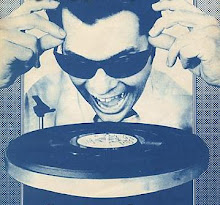
Freeform Radio Master—Dave Dixon On WABX

It was 1967 and, if we were lucky, once in a great while we might hear something cool on AM radio—Buffalo Springfield’s For What It’s Worth being a harbinger of what was to come. In the autumn of that year, Detroit’s WABX-FM began broadcasting The Troubador, an experimental show, for an hour each week.

For the first time we could listen to an eclectic mix of blues, rock, folk and jazz all within the same program. And in stereo, no less. Within six months the X was broadcasting similar programming for most of each day. For this listener, there was never any looking back at the limited, uneven, preformatted AM station offerings we had had to endure up to that point. (Remember the Zombies being followed by Percy Faith?)

As an impressionable 15-year-old music hound, I would frequently call and have lengthy conversations with the DJs while ostensibly doing homework. John Small, who soon moved over to WKNR-FM, was always very welcoming. Then ABX added Dave Dixon to its staff; he would go on to become the esteemed leader of the legendary "Air Aces."

Dixon had a “golden ear,” introducing attentive listeners to cross-cultural music on a world scale. Only on his show could one be exposed to such gems as Paul Horn’s Inside the Taj Mahal, Gandharva from Beaver & Krause, Richard Harris singing MacArthur Park and Harry Nilsson’s The Point (a complete LP side). In between, he might have mixed in a cut from John Mayall’s Blues From Laurel Canyon, some Savoy Brown (with original vocalist Chris Youlden), Cat Mother & the All-Night Newsboys and a track from Tim Buckley’s Happy Sad release. Toss in some Brian Auger Trinity (featuring Julie Driscoll on vocals) and Laura Nyro singing Eli's Coming for good measure. Not to be overlooked, Detroit artists such as Frost (Dick Wagner), the Amboy Dukes (Ted Nugent), SRC and the Stooges (Iggy Pop) would also be integrated into the mix.

Continued...
Often Dixon wouldn’t play an entire track. Instead he would seamlessly blend portions of disparate genres into a cohesive audio excursion that might last an hour, interrupted only for a FCC-mandated station ID break. His instrument was comprised of matching turntables, a mixing console and a headphone set.

I miss the days when I was INFORMED [about] new
music… even the music I didn't like I grew to appreciate
for its uniqueness. It was truly an education back
then… How will [this generation] expand [its musical]

horizons?? Surely not from corporate radio stations.

Smogboy, from At Detroit forum, 12/10/06

During his career Dixon was fired from more than one station, being labeled as gruff and argumentative. While that very well may be true, to this listener—and frequent caller—he always had time to talk about music, share what he knew, and be an encourager. This was perhaps most important, for I had started on a voyage of musical discovery long before Dave Dixon and WABX, and wondered why others didn’t seem to find music as important to their daily existence. Instead of snuffing out that desire, his unique ability as audio interpreter, alchemist and promoter fortified my quest to be ever on the alert for recordings of interest.

Today the closest one can get to freeform programming in this style rests with college radio stations having limited range, unless they're also streaming on the Internet such as WNMC in Traverse City, Michigan. While it doesn't quite match Dixon's artistry, the Internet's Radio Paradise does a credible job of filling the void left by the demise of freeform terrestial radio. (Albeit Dixon's shows were sometimes extraterrestial.)

Dixon left ABX in 1974. After 10 years in the Miami/Ft. Lauderdale market, he returned to Detroit, where for several years he played the same type of unique music mix on public station WDET as he had during those heady days of the “Air Aces.”

Listen to a 1990 Dave Dixon aircheck while he was on WDET:

After a few years doing a talk show on WXYT in Detroit, Dixon died at home in May of 1999 at age 60. His legacy is that of programming shows in the way that a painter chooses colors and textures, painstakenly and deliberately applying them on an aural canvas to provide much more than a fleeting impression.

Steve Khan Plays Jazz Guitar With Distinction

One of our favorite jazz guitarists is Steve Khan, having first heard his work while affiliated with WNMC in the ‘80s. Ten years later I heard a track called I Like the Orange Thing by the Flying Monkey Orchestra and proceeded to investigate. Featured on their terrific Back In the Pool CD, the Monkeys' lineup was a who’s who assembled by head monkey, Rob Mounsey. It included the likes of Michael Brecker, “Toots” Thielemans, Lew Soloff, and others of note.

So you're the one who bought that record...!

Rob Mounsey e-mail to Floydian Slips
May 5, 2007

In relation to Mounsey’s impressive body of work, Khan’s name kept popping up, the two having collaborated on two CDs of their own: You Are Here and the Grammy-nominated Local Color. Apart from Mounsey, Khan is known for his work with artists such as Blood, Sweat & Tears, Steely Dan, Billy Joel, Michael Franks, Hubert Laws, Billy Cobham, Jack DeJohnette, James Brown, Maynard Ferguson, and Joe Zawinul's Weather Update. He has also played with Randy Brecker, David Sanborn, Larry Coryell, Ron Carter and Al Foster, among many others.


Khan's interpretation of the Beatles' Within You Without You, segued into the group's Blue Jay Way, is certainly worth a listen. And there are complete samples of some of Khan's other work at his MySpace page. Captured in New York, below is a Feb. ’92 video of Khan—with Jay Anderson (bass) and Ben Perowsky (drums)—playing Wayne Shorter’s Masqualero.

In the annals of rediscovered live jazz recordings, The Suitcase,
by guitarist Steve Khan, ranks among the best in recent memory.

All About Jazz.com, Feb. 26, 2008


This just in:

Dear Floydian Slips:

First, thanks so much for writing via the CONTACT STEVE page at my site. When one has been recording under their own name for over 30 years, it's hard to know just when a listener might come upon something. What I tried to do at the MySpace page was to capture a little bit of everything from almost all the time periods. Again, thanks for your kindness in sharing with me!!!

Steve Khan, June 9, 2009


Jazz: From Dave Brubeck To Miles Davis

KXJZ To Present "Jazz: The '59 Sound" 06/10/09
(Repeated 06/22/09)


Don't know about jazz? Want to learn? The best way is to simply listen for awhile; you'll soon discover what you do and don't like. In the '60s, I got my start by tuning into WJZZ and WDET in Detroit after WABX started playing tracks from Miles Davis' seminal crossover LP, Bitches Brew, featuring the likes of John McLaughlin (Mahavishnu Orchestra), never mind Joe Zawinul and Wayne Shorter (the latter two being Weather Report co-founders).

Today, Sacramento's KXJZ has a great nightly jazz program, with their Gary Vercelli having introduced me to some great tracks I otherwise might never have heard. Examples include Hemispheres' awesome Orca Stroll (led by Ian Dogole and featuring {the group} Oregon's fabulous Paul McCandless) as well as Lea DeLaria's cover of Los Lobos' Kiko and the Lavender Moon.


From KXJZ yesterday morning:

Jazz is a living music that evolves and expands. Each generation of players brings in the sounds of their time and affect the course of its growth. June 10th at 9 pm (PDT) we'll explore this.

In 1959, jazz music got a kick start in many directions. Innovators like Miles Davis, Charles Mingus, and Dave Brubeck tried new approaches and concepts that are still being worked on today. Through albums such as Sketches of Spain, Mingus Ah Um, and Time Out, jazz was set on a new course that would change the musical landscape forever.

But I mean jazz...jazz is where it's at!

Traffic, Giving To You

In this one hour radio show, you will hear highlights from these classic records, as well as the inspiration and ideas behind the music created in 1959 from musicians Dave Brubeck and Carlos Santana, journalist Ben Ratliff, and composers and conductors Russell Gloyd and Maria Schneider, and family members and noted jazz historians Sue Mingus and Darius Brubeck.

Don't live in the Sacramento area? No problem—KXJZ streams its programming on the 'Net. Just remember that this special jazz program airs next Wednesday at 9 pm Pacific Daylight Time.

Bonus: Click here to sample each track from Hemispheres' Night Harvest CD, which you may purchase from Ian Dogole's website. You may also click here to play a video of the group's Nostalgia, recorded in 2003 at the best venue ever—142 Throckmorton Theater in Mill Valley, CA. This is where we had front row seats for Hemispheres' 2008 show.

What else was going in the world of jazz in 1959? Click here to find out.

Anita O'Day: Jazz On a Summer's Day

As a hardcore jazz concert film, this fails. But wait! If you view all of the commentary stuff *first*, then watch the actual film, it's a surrealistic journey back in time.Jazz On A Summer's Day* is cross-cultural, interracial—even abstract at times.

When you consider Newport, Rhode Island, in 1958 as the backdrop, then this film is an absolute cultural gem and a must-see for anyone interested in sociology of pre-60's America. In fact, Woodstock (the movie) would not have been what it was had not this film predated it by 10+ years.

Wikipedia cites that in "1999, the film was selected for preservation in the United States National Film Registry by the Library of Congress as being 'culturally, historically, or aesthetically significant.'"

Anita O'Day in Jazz On a Summer's Day

Louis Armstrong, Dinah Washington, Thelonious Monk, Gerry Mulligan, George Shearing, and even Chuck Berry all appear, but it was the inimitable Anita O'Day who absolutely stole the show! Alan Kurtz provides a more thorough review of the event, the film, and related audio recordings over at jazz.com.

P.S.—Of note is that, at 1:33 in the embedded video clip, Atlantic Records' founder, Ahmet Ertegun, is seen in lower right portion of the video. Atlantic, of course, was the label for a veritable who's who in the music world, including Ray Charles (before jumping ship to ABC Dunhill).

*Using Amazon's Video On Demand, instantly watch this film on your PC by clicking the DVD cover image or the adjacent film title text link above.

"Toots" Thielemans, Rickenbackers & the Beatles

Walkin' & Hummin'

Over the years I bought a lot of jazz LPs, some of which featured a captivating harmonica part. Examining the jacket credits, this guy "Toots" Thielemans kept cropping up over and over. On Quincy Jones' excellent Gula Matari release (very hard to get on CD!), several recordings by Bob James ...the list goes on extensively. I always loved his work, but had no idea who this "Toots" guy was—other than he was apparently very much in demand.

Sometime later I heard The Flying Monkey Orchestra's I Like the Orange Thing while listening to KYOT in Scottsdale, AZ. Chasing down the Monkeys' excellent Back In the Pool CD (recommended!), the credits listed a veritable who's who of the contemporary jazz scene—including Toots.

Then I read yet another bio on the Fab Four, in which I learned the following: it was this 1958 photo (left) that John Lennon saw one day in Hamburg, Germany, and thought, "Gee, if a Rickenbacker guitar is good enough for Jean "Toots" Thielemans, then the George Shearing Orchestra's guitarist, it's good enough for me!" When the Byrds (David Crosby, Roger McGuinn, et al.) saw A Hard Day's Night at the theater, in turn they rushed right out and got themselves 12-string Rickenbackers, providing that distinctive Byrds sound. All from this one photo and Thielemans' reputation (he had earlier been a member of Charlie Parker's All Stars).

Now I was really curious about Thielemans, perennial winner of the Down Beat readers' and critics' poll in the "miscellaneous instruments" category. So when I discovered he was coming to the renowned Yoshi's sushi restaurant and jazz club two years ago this month, I dragged the wife off for dinner and Toots' act.

On our way to drop our son off at the Oakland airport for a flight back east, we had previously dined in the restaurant section of Yoshi's—located in Jack London Square. Served Japanese fashion (sans shoes), we found the sushi to be of the best quality and knew we'd be back at the first opportunity. This time, though, Joanna and I opted for a stage-side table in the jazz club in order to assure us of a good listening/viewing vantage point. Again we were not disappointed, the sushi being every bit as good as we had remembered.

Then the show began, with Toots, then 83, being helped onstage. Enthralled by his natural charm, we were captivated by his performance, especially given his ability to keep it all going at his age! The lineup also featured Kenny Werner on piano and, by the end of his performance, we had been treated to Toots' command of both the harmonica and electric guitar. Sorry, I don't remember if it was a Rickenbacker.

Now if Yoshi's would only book Oakland's own Pharoah Sanders again...

"Toots" Thielemans performs Sophisticated Lady

Leon Russell, Frank Zappa, Iggy Pop & Friends

And So We Get Started...

This blog is about music...many genres of music, as it happens, though I'm not predisposed to country nor rap. I'm a bit old-school, but you'll find my tastes are all over the place—from John Coltrane to Hoyt Axton, Roy Orbison to Vivaldi, Diana Krall to Blue Oyster Cult.

That's not to say that I don't appreciate an occasional offering from an Alan Jackson or a M.C. Hammer (like I said, I'm a bit old school), but don't expect to learn anything about the latest alt rock by reading any of this. Once in a while I may let my fondness for some group like Porcupine Tree, the Doves, or Durutti Column be known, but unless I get tipped off by (the best thing to happen to Internet radio), or by my daughter, Brooke, I don't spend much time chasing that down. Sorry. There are only so many hours in the day in which to listen.

Rather, I'm writing this blog to hopefully broaden your own audio spectrum: to perhaps turn you on to some obscure piece of music that's really going to do it for you. Like anything recorded by Yulara. But I'm getting way ahead of myself.

Along the way, I intend to provide you with some historical background—as much as I care to, that is. For example, that the record companies originally told George Benson to, as the title of an unrelated Frank Zappa recording attests, Shut Up 'N Play Yer Guitar. They believed that no one would ever want to hear poor George sing and, thankfully, they were very wrong.

(Though you've probably heard George's rendition of The Drifters' On Broadway by now, check out his version of Leon Russell's This Masquerade. And now that I've mentioned Leon, were you aware that it was he who penned This Diamond Ring, a big Top 40 hit for Gary Lewis & the Playboys? And yes, Gary is the son of Jerry Lewis, the goonier half [?!] of the Martin & Lewis comedy team. It turns out that, way before Joe Cocker and Mad Dogs & Englishmen, ol' Leon was a L.A. studio musician playing with the likes of some guy by the name of Glen Campbell.)

See? That's the kind of historical stuff I'm going to be weaving through this blog. Along with ideas for some really cool segues (track mixing) you probably wouldn't have ever considered. We'll talk about gear, from semi-audiophile stuff all the way down to the smallest flash-based MP3 players—though it is not my intention to compete with the likes of Sound and Vision magazine or Engadget.

And I'll relate some personal stories, such as going on a school-sanctioned field trip to see/hear Cream the first time they played Detroit in 1967. Or having Iggy Pop (aka Iggy Stooge) lick my Kodak camera lens. Or catching an early Grand Funk Railroad (subsequently forced to shorten their name to Grand Funk) at an outdoor summer festival at Mt. Holly (near Flint, MI).

But wait! Did someone mention the blues? And jazz? Zydeco? Ambient/trance/acid jazz, et al.? And a whole lot of other stuff? Writing this on a PC holding well over 27,000 processed tracks stashed on 1TB RAID5 disk array (and easily twice that many that have yet to be "processed"), I think I've got the subject covered, though I know of a couple of guys whose collections dwarf mine.

Happy listening!